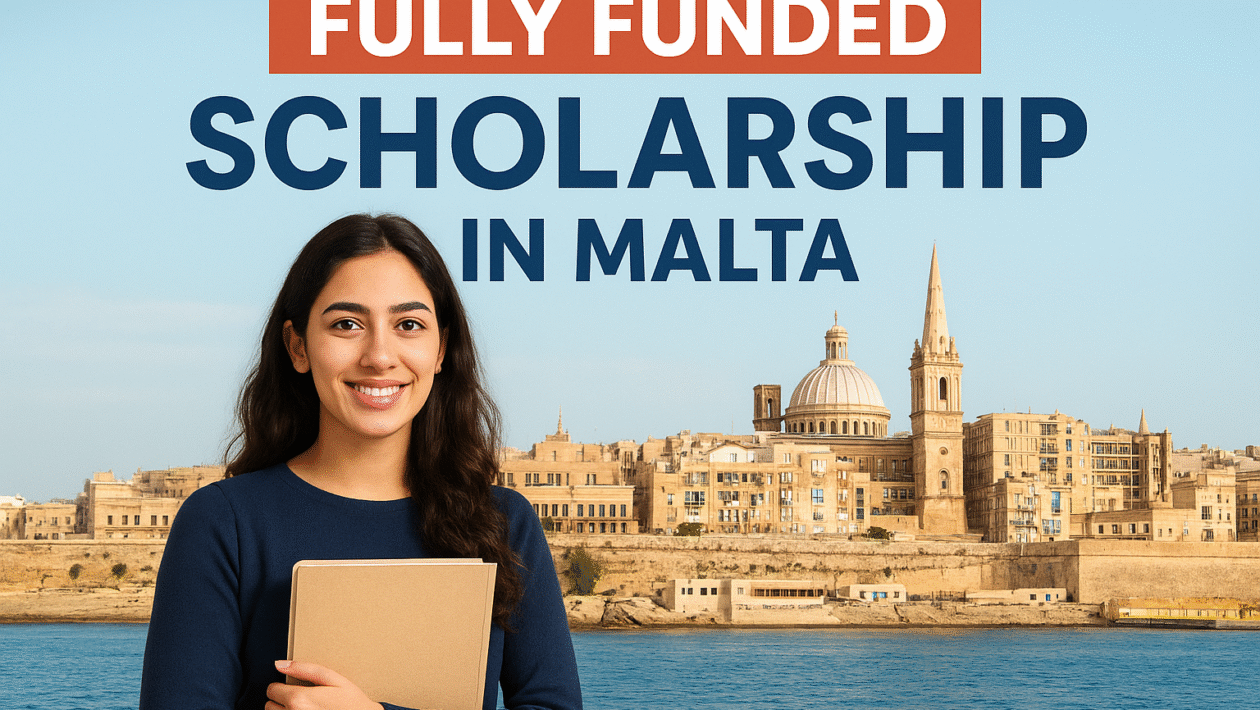
Malta has become an increasingly attractive destination for higher education, not only because of its Mediterranean climate, rich history, and multilingual environment, but also due to the growing number of scholarship opportunities that make studying there more accessible—even fully financed scholarships. Below, we explore what fully funded scholarships in Malta look like, share real testimonials, highlight a few flagship programmes, perhaps dispel myths, and offer guidance if you plan to apply.
—
What “Fully Funded” Means in Malta
A fully funded scholarship generally covers most of the expenses required to study abroad in Malta, which may include:
Tuition fees
Living stipend (accommodation, food, daily expenses)
Research or project costs (if relevant)
Sometimes travel or flight costs
However, “fully funded” can vary: some scholarships may not cover travel, or may have limits on maintenance amounts or allowances. Always read the terms carefully.
—
Examples of Fully Funded Scholarship Programmes
Here are some of the current or recent fully funded scholarship offerings in or for Malta:
1. Malta Government Endeavour Scholarship (ENDEAVOUR II)
This is aimed at postgraduate (Master’s, PhD) studies (MQF Levels 7 & 8).
Offers include full tuition, living stipends, and other allowances.
2. University of Malta Master’s Scholarship 2025 (M.Sc. by Research in Geosciences)
Covers full tuition for the research programme.
Provides a stipend of about €500/month for one year.
The project includes training in specialised software (e.g. SeisComP, ISOLA) in earthquake/seismic analysis.
3. “Islands and Small States” Scholarships by University of Malta
Designed for students from Small Island Developing States (SIDS).
Features include full tuition waiver, research allowances, possibly travel support, depending on level and programme.
4. Other Opportunities
There are scholarships that include bench fees, maintenance grants (e.g. ~€1,500) per semester.
Some cover tuition entirely, but expect living expenses or travel to be handled separately.
—
Student Testimonials & Personal Reviews
While many of the scholarship schemes are relatively new or operate on research-basis, there are some related testimonials from students in Malta that shed light on experiences, even if not all under fully funded schemes.
From the University of Malta, MSc Signals, Systems & Control Engineering
> “Taking the MSc in Signals, Systems, and Control Engineering at the University of Malta was an overall positive experience for me. The course was quite challenging, yet very rewarding. Our small class size allowed our lecturers to focus on us individually, making the learning process more personal and effective. … I believe this course has improved my career potential by giving me advanced skills and knowledge …” — Simon Sultana
From students in the Master of Arts in Transdisciplinary Childhood Studies
> “The staff at the Centre for Resilience and Socio-Emotional Health were exceptionally supportive, always ready with guidance and encouragement. … I truly feel that the course has enriched me on a personal and professional level.” — Marilyn Spiteri Scicluna
Entrepreneurial course at University of Malta (MEnt: Knowledge-based Entrepreneurship)
> “Pursuing the Masters in Entrepreneurship was one of the best business decisions I ever made. It not only helped me to understand what business is all about but equipped me with the tools and confidence …” — Claire Ciancio
“The assignments given were varied giving practical examples which could easily be applied to any business. … I have never learnt so much!” — Melania Spiteri
These testimonials, while sometimes from programmes that are only partially funded or not fully funded, give insight into what life, teaching quality, and mentorship are like in Malta at top institutions.
—
Pros & Cons — What Students Say
From reviews and discussions among past applicants, scholarship holders, and current students, here are commonly mentioned advantages and challenges:
Pros
High quality of teaching and academic supervision, especially in research-intensive programmes.
Small class sizes in many Master’s/PhD programmes allowing personalized guidance.
Multicultural environment—students from many countries study in Malta; this enriches networks, perspectives.
Many programmes have practical components (projects, fieldwork, research tools) which enhance employability.
Challenges
Living costs can be higher than many expect—fully funding sometimes does not cover travel, or extra personal expenses beyond stipend.
Some scholarship amounts may have constraints (how many instalments, timing of disbursement).
Competition can be intense, especially for flagship opportunities (e.g. Endeavour).
Administrative or visa processes can be slow; some students report delays in disbursements of stipends.
—
Tips if You Want to Apply (And Succeed)
If you’re considering applying for a fully funded scholarship in Malta, here are practical steps and tips:
1. Start early — gather your documents (transcripts, recommendation letters, research proposals if needed) well ahead of deadlines.
2. Check eligibility carefully — some require you to come from “Small States”, or from certain academic fields; others may require proof of English language ability (but some scholarships now waive IELTS or accept alternative proof).
3. Write a strong proposal or statement — especially for research scholarships, clarity of purpose, demonstration of how your work aligns with Malta’s priorities or the scholarship’s aims, and capacity to succeed are key.
4. Connect with current or past beneficiaries — LinkedIn, university websites, or mentorship groups can help you get first-hand accounts, tips, and perhaps even sample successful applications.
5. Budget beyond the stipend — even with fully funded support, things like travel, medical insurance, initial setup (housing, deposit), books or supplies may not be fully covered. Having some backup helps.
6. Stay organized — track deadlines, required documents, submission portals. Missing one item can disqualify you.
—
Final Thoughts
Malta offers an exciting, viable pathway for students seeking well-supported higher education in Europe, especially for graduate and research-oriented studies. Fully funded scholarships are increasingly available, and while they come with their own challenges, many students testify that the experiences are worthwhile: academically rigorous, personally enriching, and professionally valuable.
If you’re serious about applying, treat the process like a project: plan well, prepare well, and leverage every resource available. The rewards can extend far beyond just the degree.